
Sources for Previous Residents of a Washington Address
Previous residents are found by pairing legal property records with dated household sources. The Washington County Recorder can show transfers and parties. Directories, newspapers, census releases, death indexes, probate files, oral histories, and permits can add people or events, but each source has a different meaning. A deed proves a recorded interest. A directory lists a household snapshot. Neither alone proves who lived in a house every day.
| Source | Years It Covers | Where Held | What It Shows |
|---|---|---|---|
| Recorder deed and historical index | Current portal; exact start not located | Washington County Recorder | Grantor, grantee, instrument, date, legal description |
| Old Abstract material | Historic Saint George references; 1854–1992 map context | Utah State Archives / county map inventory | Older lot, abstract, and deed-chain clues |
| WCHS gazetteers and directories | 1874; 1879–80; 1892–93; 1903–04 | Washington County Historical Society | Regional names, places, businesses |
| Washington County News | Jan. 30, 1908–Dec. 1923 | WCHS inventory | Notices, social items, obituaries, local events |
| Federal census | 1850–2010 releases, 72-year rule | Archives and library databases | Dated household snapshots |
| City Inspect and GRAMA | Current workflow; cutoff not located | Washington City Building / records custodians | Permit, inspection, notice, and work trail |
| Death index and probate | Death index 1905–1970; Archives court series dates vary | OVRS, State Archives, county courts | End points, family clues, estate roles |
Start with the Recorder for the latest transfer, then choose the source that matches the era. For older lots, consult Old Abstract and plat material. For household names, use the dated WCHS leads, library reference desk, Archives, Utah Tech, and census. For a recent permit or code issue, use City Inspect or a precise GRAMA request. No official Washington City criss-cross run was located, so do not assume an address index exists.
The Washington County recording requirements page explains the document and copy route.
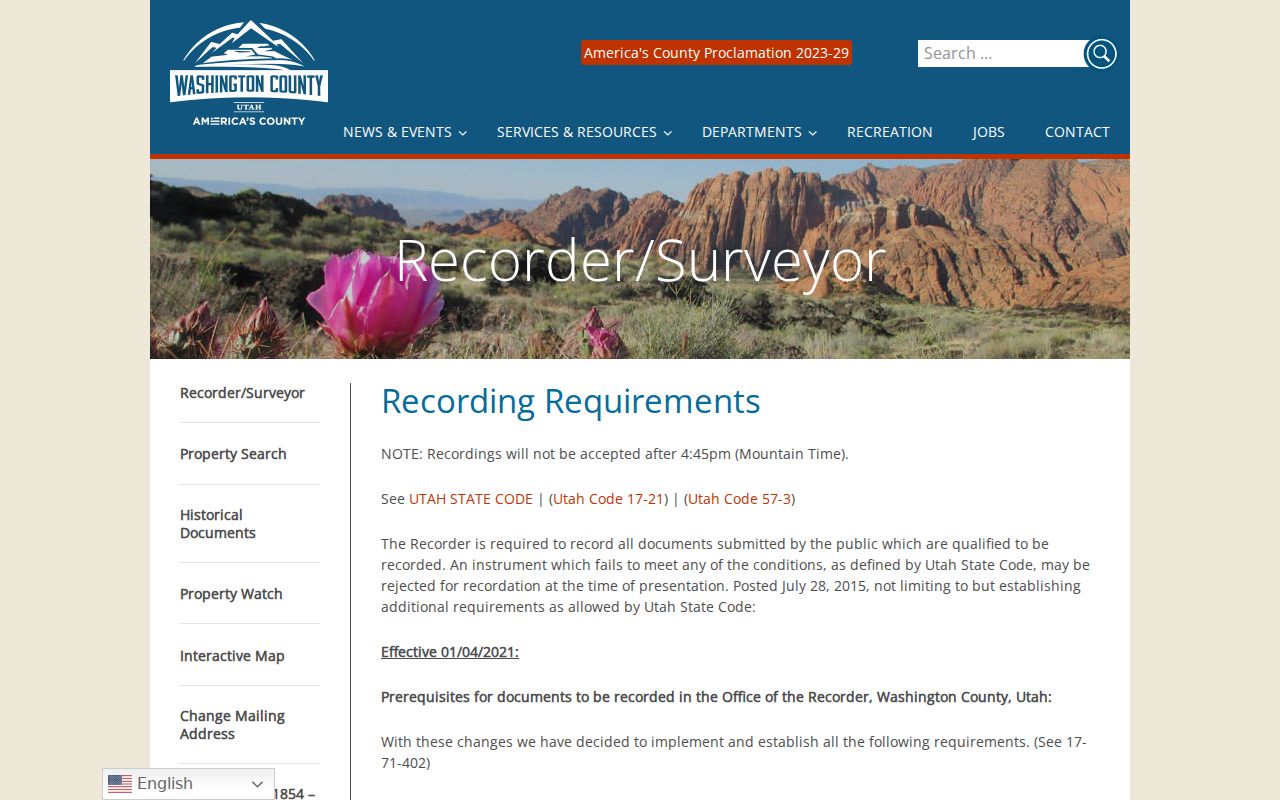
Check format, legal description, delivery, fee, and redaction details before ordering an instrument.
Tracing Past Owners Through the Washington County Deed Chain
The backward trail begins with the modern parcel and situs address. Use GIS and the Assessor to record parcel/account/TAX_ID, subdivision, legal description, ownership label, and mailing versus situs address. Then search the Recorder’s historical application for party name or search value, party role, book, page, document type, recording or filing date, document date, parcel, page, and volume. The exact online cutoff was not located, so older gaps must stay marked.
- Locate the parcel in the county GIS or Recorder map and copy only the public identifiers and legal description needed for the search.
- Find the latest recorded purchase or transfer, then note the grantor, grantee, instrument or document number, book/page, and date.
- Search the seller as a grantee in an earlier instrument, using the legal description and parcel as cross-checks.
- Repeat backward until the online index stops, a name variant appears, or a historic jurisdiction needs an abstract or plat.
- Ask the Recorder, Archives, or a reference desk for record books, microfilm, or a defined copy request under current fees and redaction rules.
- Grantor and grantee
- The grantor transfers an interest; the grantee receives it. Neither role alone proves residence.
- Chain of title
- The linked sequence of recorded interests that explains how a parcel moved through time.
- Legal description
- The recorded land description, often more reliable than a changed street number for old records.
- Situs
- The physical parcel address, distinct from the mailing address used for notices.
Past Households: Directories, Census, and Obituaries
Past households need a separate layer from ownership. The verified WCHS shelf includes gazetteers from 1874, 1879–80, 1892–93, and 1903–04, plus Washington County News from 1908–1923. Federal census years can fill broad gaps, subject to the 72-year public-release rule. No complete Washington City reverse directory was located. A directory row or newspaper item is a dated lead, not a full household roll.
Close the trail with a Utah death index, cemetery inquiry, obituary, or probate record. The death index covers 1905–1970 and may describe residence, burial, parents, birth, and cause fields. Washington City’s cemetery history warns that flood damage and lost or unmarked pioneer markers can leave a name without a certain grave location. The collection details are on the Washington city directory collections page; the backward address trail stays here.
Lawful use. Previous-resident research in Washington belongs to house history, family history, and personal curiosity. Do not use a past address trail to track, harass, threaten, or target a living person, and do not publish living heirs’ addresses.
Historical names can also be tied to Washington places. The Cotton Mill, Old School/Museum, Covington Home, cemetery, and 1857 street grid point toward WCHS, Utah Tech, city-history, newspaper, and parcel sources. Keep a historical role or event date attached to each name.
Washington Abstracts and Plat Clues
The Old Abstract inventory contains Saint George abstract material and historic lot references that may not look like a modern Washington address. Use it to understand a book, page, line, or lot clue, then cross-check with the Recorder’s current historical search and county parcel layers. Preserve the original jurisdiction label rather than translating it into a current city without evidence.
Historic ownership plats and aerial layers can show a parcel’s changing shape or subdivision context. They cannot identify every person present. Record the map year, layer name, source office, and whether the item is a finding aid, image, or current viewer.
The Old Abstract inventory provides the historic lot and abstract context.
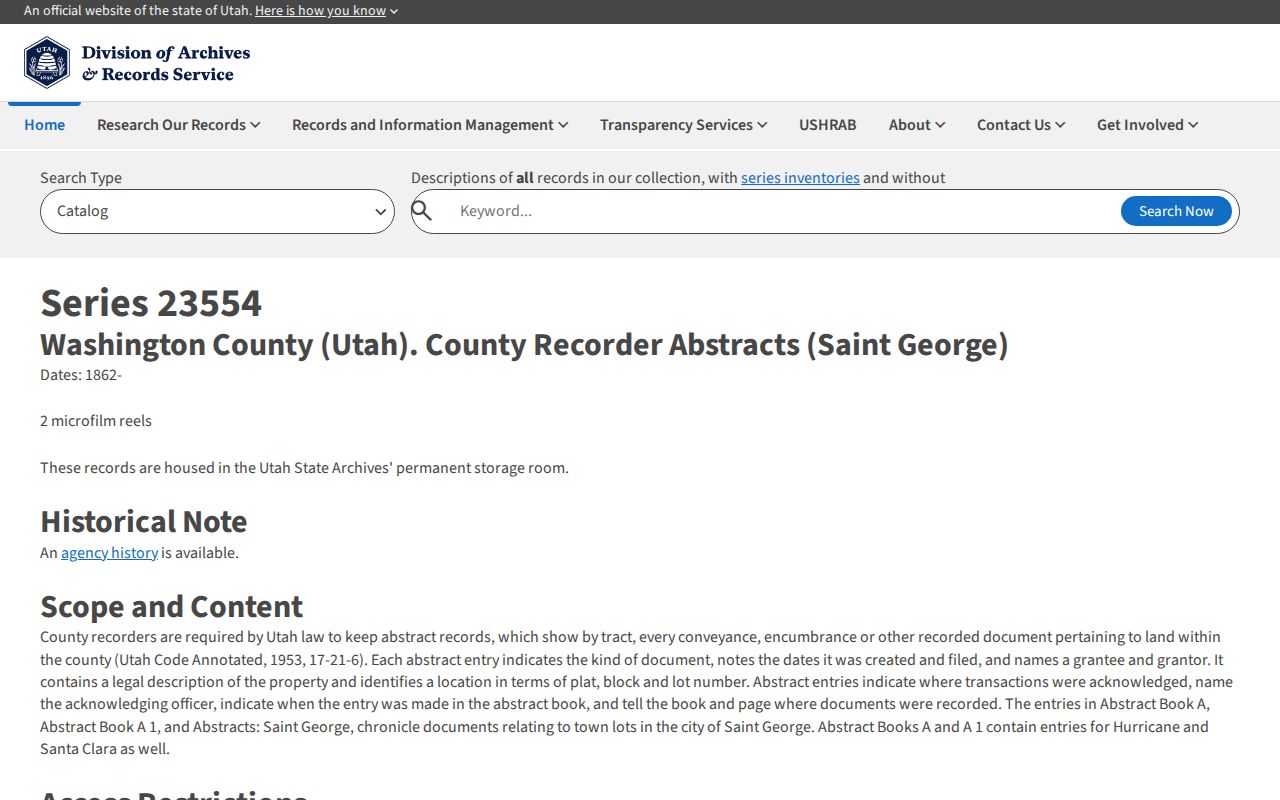
It is a chain-of-title clue, not a current owner or occupant list.
Washington Recorder Copy Route
After the index identifies an instrument, check the Washington County Recorder’s current recording requirements before seeking a copy or filing related material. The guidance covers white 8.5-by-11 paper, margins, recorder space, one-sided pages, legible text, original or certified copy, English or translation, title, legal description, parcel tax ID, notarization, signatures, signer names, and delivery.
The county’s 2026 notice says the applicable recording fee rose to $45 and recorded-document redaction is $10 effective May 6. Treat those as time-sensitive amounts and confirm them on the current notice. A copy request should name the instrument, book/page or document number, parcel, date, and whether ordinary or certified material is needed.
Washington Landmarks Anchor Names
Named places can narrow a house-history search. The Cotton Mill, Covington Home, Old School/Museum, Adair Spring, Relief Society, Granary, and cemetery connect city history to WCHS, Utah Tech, newspapers, maps, and recorded property material. The Cotton Mill timeline includes construction beginning in 1866, a first story in 1867, a completion phase in 1870, closure in 1904, CCC use in 1935, and National Register status in 1971.
Use a landmark as a search term and source anchor, not as a shortcut to a current owner. Pair historic-site facts with an instrument, parcel, dated newspaper, oral history, or institutional file.
Washington House-History Gaps
No Washington City Sanborn edition or official criss-cross run was located. The Library of Congress Sanborn guide documents how to search by state, city, edition, and sheet, but a different Utah city’s map cannot be substituted. For building history, use City Inspect, historic-site files, WCHS, Utah Tech, newspapers, recorder instruments, tax context, and historic aerials.
Utah Tech’s WASH-046 collection has historic-house-tour records, photographs, maps, newsletters, minutes, and civic files from 1981–2000. Oral histories add dated memories, while WCHS’s Washington County News inventory supplies a bounded newspaper run. A careful previous residents search states what was not located and keeps the next reference request specific.
The Washington County history entry point is a local context source for older property and community research.
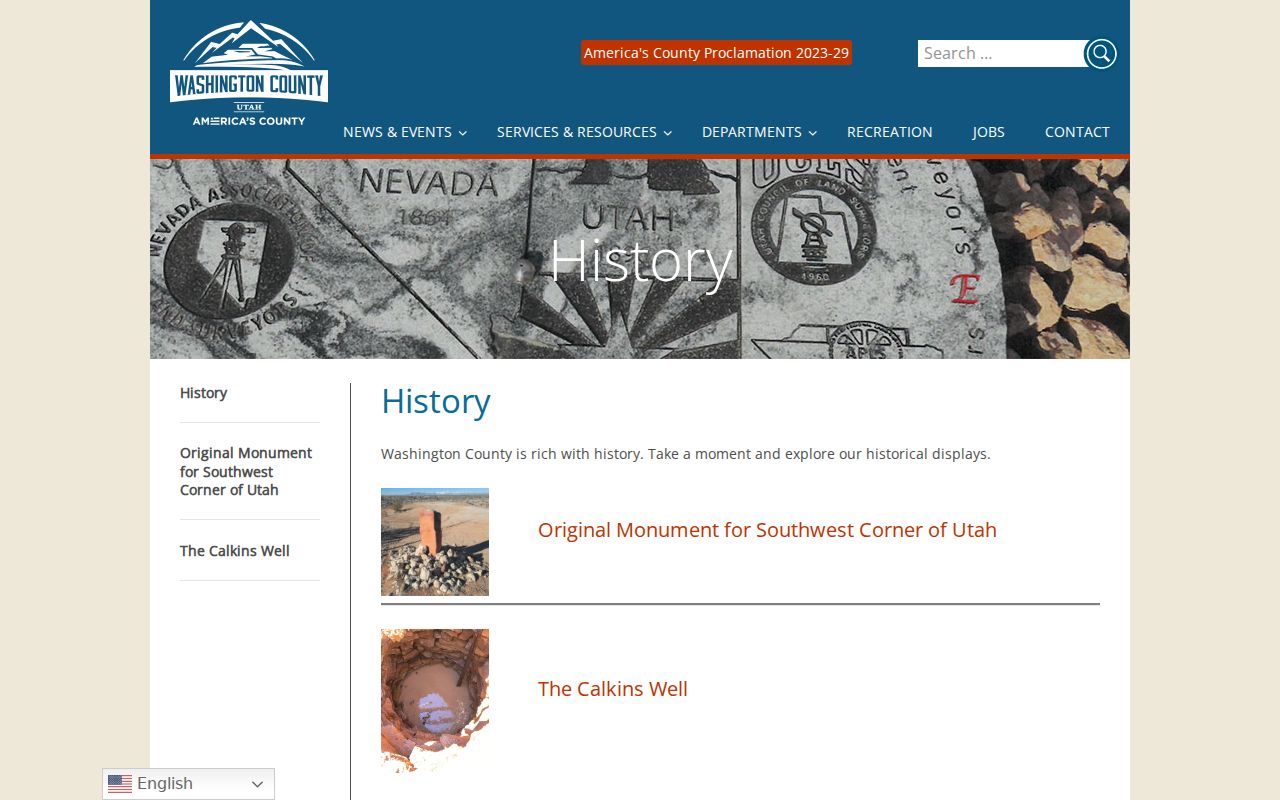
Use history pages to select a dated source, then verify the person or parcel in the proper record system.
Previous Residents Need Dates
A grantee is not necessarily a resident. A newspaper visitor is not necessarily a local household member. A permit applicant is not necessarily the owner. A death-index residence is historical. For every name, preserve the record role, date, source, jurisdiction, and confidence. If two records conflict, display the conflict and ask the custodian rather than choosing the cleaner story.
Raw requests, private HOA records, full voter files, signatures, and unredacted vital or court documents do not belong in a public directory. A short source-backed citation is enough to guide a researcher toward the proper office without turning previous residents into a public dossier.
The Utah Tech oral-history collection supplies a dated first-person route.
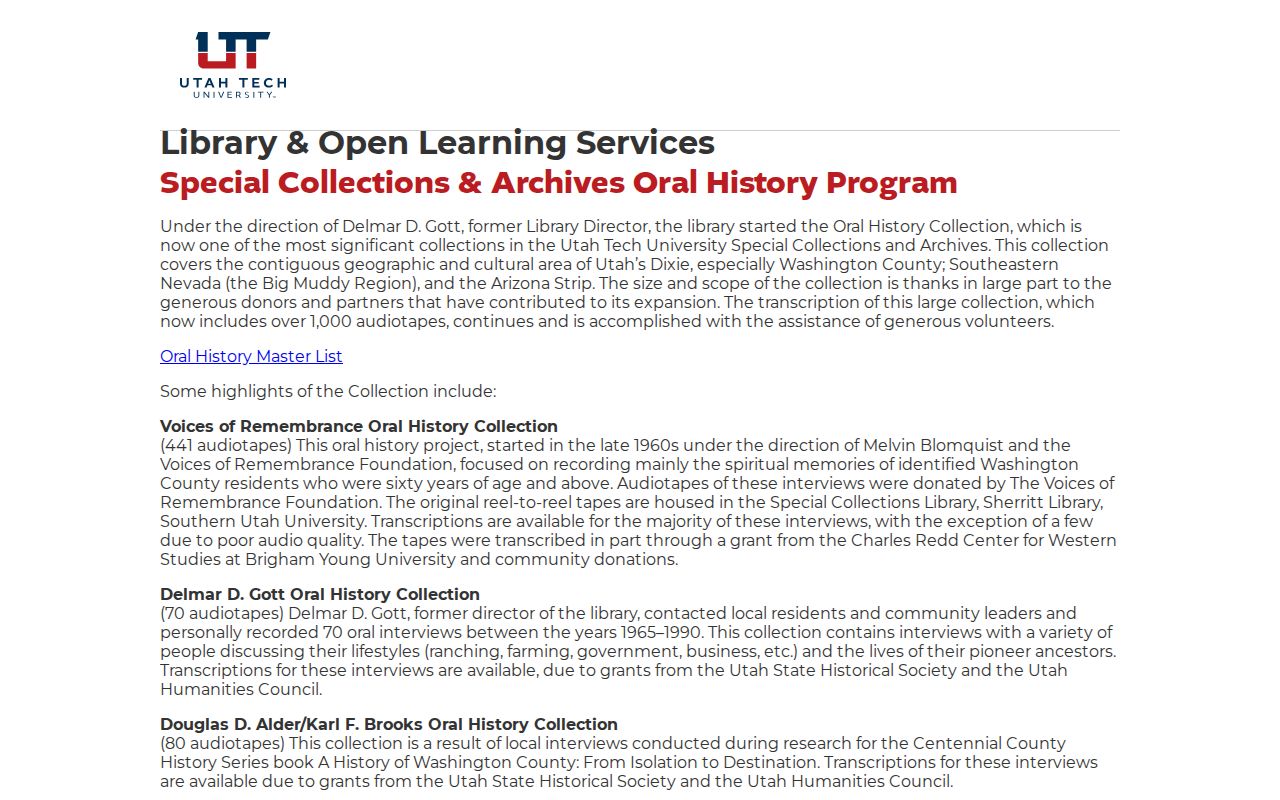
Oral testimony needs speaker, interview date, collection, and context before it is used in a house history.
The Library of Congress Sanborn search guide documents the negative map search.
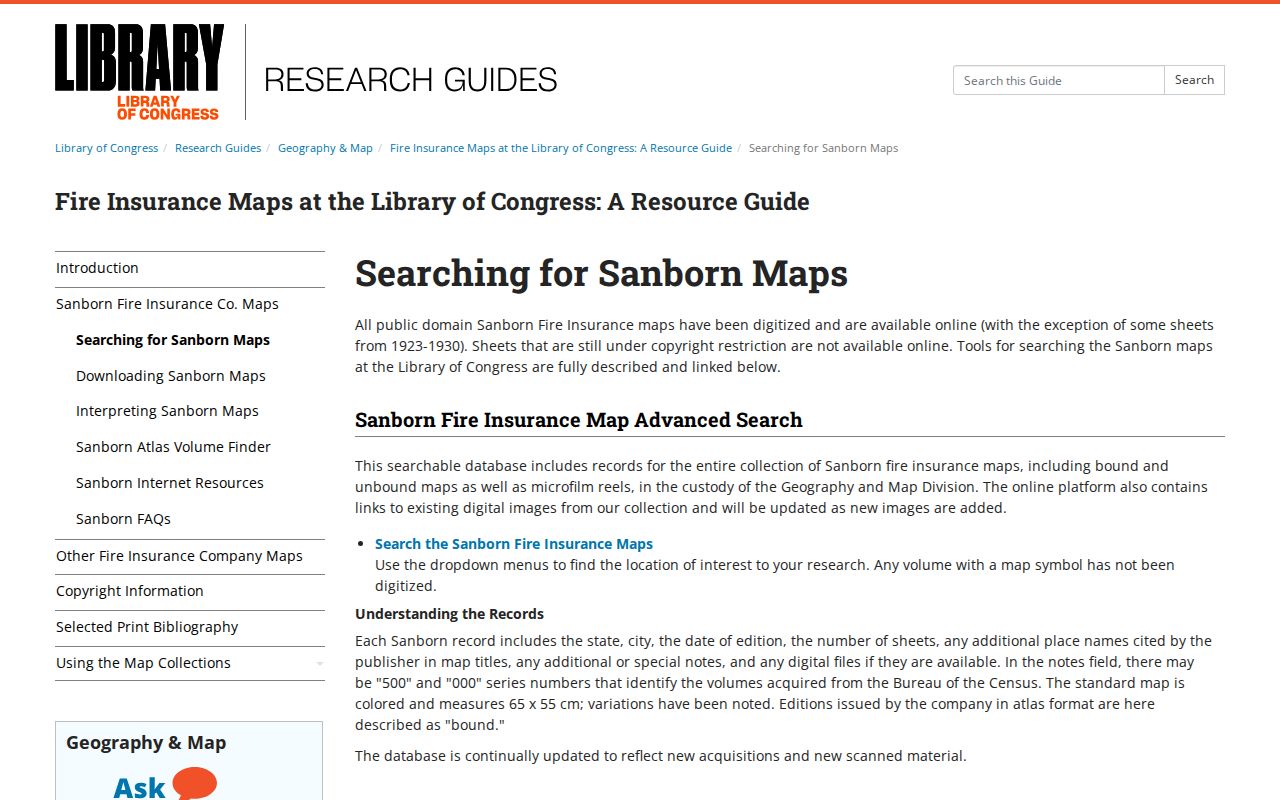
No Washington City edition was located, so the guide is method evidence rather than a substitute local map.